

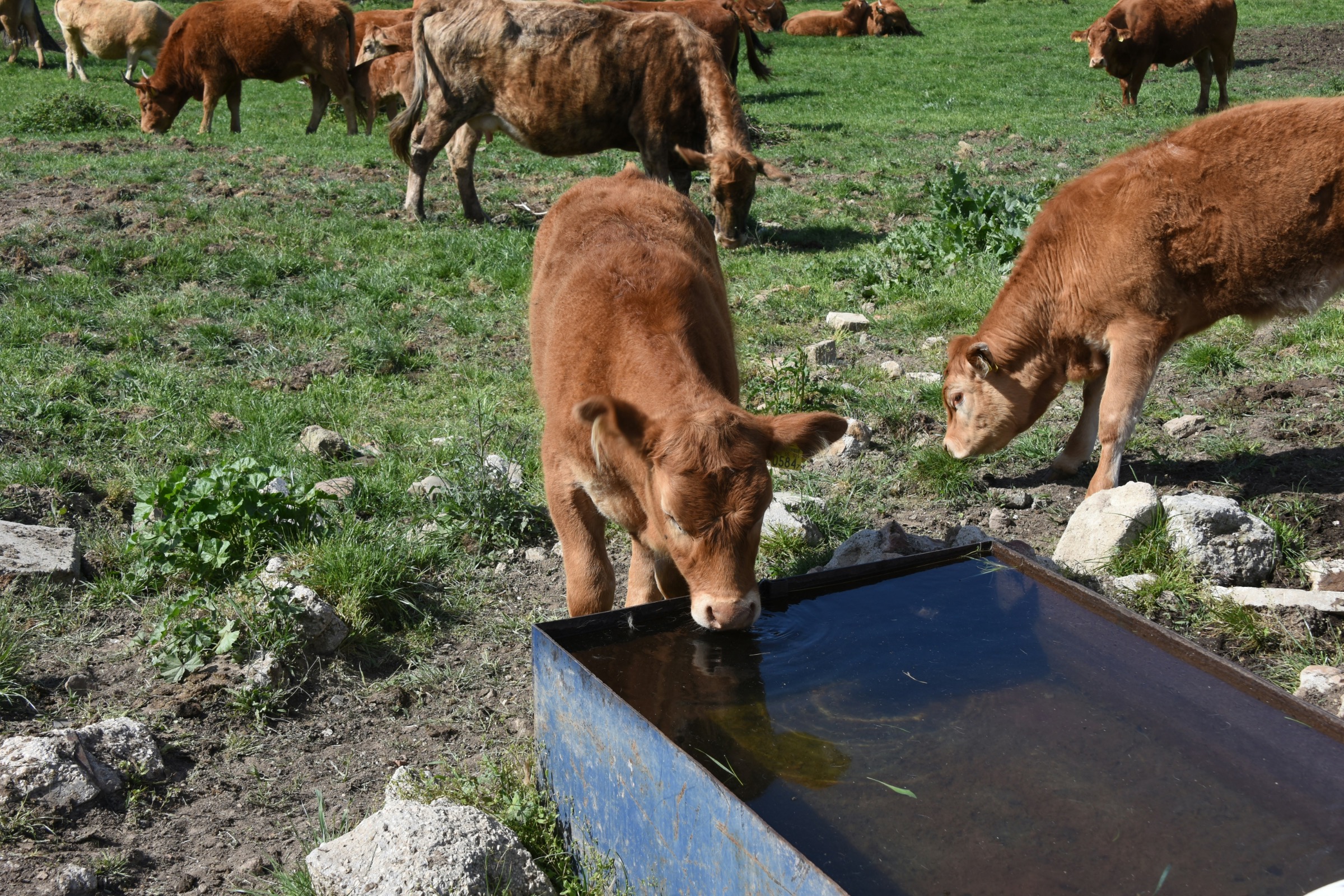
When production is down and you can’t figure out why, most producers start looking at feed, health protocols, maybe the genetics of a particular group. They walk the pasture, they call the vet, they second-guess a dozen different decisions. And a lot of the time, the answer they keep walking past is sitting right there at the water tank.
Water is the most underestimated input on most farms. Not because farmers don’t know it matters, but because it’s easy to assume “the water’s running” and move on. Whether there’s enough of it, whether your animals can actually access it without competing, whether your system is genuinely keeping pace with what your herd needs every single day — those are different questions, and they don’t always get asked until something else starts going sideways.
Mike Rowe built a career on the idea that the unglamorous stuff is usually the most important stuff. Nobody makes a TV show about calculating livestock water requirements per head per day. But get it wrong and your whole operation feels it, often without ever connecting the dots back to the waterer.
Here’s what the numbers actually look like, what affects them, and what they mean for the system you’re running.
Why Water Is the Most Underestimated Input on the Farm
Most producers think about water as a baseline, something that either works or doesn’t. But water intake is directly tied to nearly every performance metric that matters on a livestock operation. Feed conversion, daily weight gain, milk production, reproductive performance, and overall herd health all move in the same direction as water availability. When water intake drops, even moderately, everything else follows.
The challenge is that a water deficit doesn’t always announce itself obviously. You’re not going to walk out and find your cattle passed out from dehydration. What you’re more likely to see is a subtle performance drag that’s easy to blame on a dozen other things: slightly lower weight gains, cows that aren’t cycling quite right, animals that seem less interested in feed, a general flatness in the herd that’s hard to put a number on.
A study from the University of Nebraska Extension found that even a 10% reduction in water intake can noticeably reduce feed consumption and daily gain in beef cattle. That’s not a catastrophic water failure. That’s just a system that isn’t quite keeping up, playing out quietly across your whole herd every single day.
Most watering systems on working farms were designed for a smaller operation, or were put in by someone who made their best guess about what the farm would need. As herds grow and operations expand, the system often doesn’t keep pace. The waterer that worked fine for 25 head starts showing its limits at 60, and by the time it’s obvious, you’ve already been leaving performance on the table for a while.
The Numbers: Livestock Water Requirements Per Head Per Day
These are general guidelines based on research from university extension programs and are widely used across the industry. Actual intake varies based on temperature, feed type, production stage, and individual animal factors, but these ranges give you a solid working baseline for system planning.
Beef Cattle
| Animal Class | Daily Water Requirement |
| Calves (weaned, 400–600 lbs) | 4–8 gallons |
| Stocker/feeder cattle (600–800 lbs) | 8–12 gallons |
| Cow-calf pairs | 15–20 gallons |
| Mature beef cows (dry) | 10–15 gallons |
| Bulls | 15–20 gallons |
| Finishing cattle (900–1,200 lbs) | 12–20 gallons |
Dairy Cattle
| Animal Class | Daily Water Requirement |
| Heifers | 10–15 gallons |
| Dry cows | 15–20 gallons |
| Lactating cows | 30–50 gallons |
Lactating dairy cows have by far the highest water demand of any common livestock class. A high-producing dairy cow can consume close to 50 gallons on a hot day, and a system that can’t deliver that consistently will show up immediately in milk production numbers.
Horses
| Animal Class | Daily Water Requirement |
| Mature horse (maintenance) | 8–12 gallons |
| Working horse | 12–20 gallons |
| Lactating mare | 15–20 gallons |
Horses are also more sensitive to water quality than cattle. They’ll reduce intake noticeably if the water is warm, algae-covered, or has a strong mineral taste, which means a horse that technically has access to water may not be drinking enough.
Goats and Sheep
| Animal Class | Daily Water Requirement |
| Mature goat (maintenance) | 0.5–3 gallons |
| Lactating doe | 3–5 gallons |
| Mature sheep (maintenance) | 0.5–2 gallons |
| Lactating ewe | 2–4 gallons |
Goats and sheep have lower overall water needs than cattle, but they’re still affected by temperature and production stage. Lactating does and ewes need significantly more than dry animals, and small producers often underestimate the swing.
Hogs
| Animal Class | Daily Water Requirement |
| Nursery pigs | 0.25–0.5 gallons |
| Grower/finisher | 0.5–1.5 gallons |
| Gestating sow | 3–5 gallons |
| Lactating sow | 5–8 gallons |
The Heat Factor: When Your Normal Numbers Stop Being Normal
Every number in that table assumes reasonable temperatures. Once the heat index climbs, all bets are off.
Livestock water requirements can nearly double during hot weather, and that’s not an exaggeration. A beef cow that needs 12 gallons on a 60-degree day might need 20 to 25 gallons when it’s 95 degrees and humid. Horses and dairy cattle are especially sensitive to heat-driven water demand increases, and the farms that get caught flat-footed in July are almost always the ones whose systems were sized for average conditions instead of peak demand.
This is also when underperforming systems get exposed. A waterer that refills just fast enough on a mild spring day simply cannot keep up when every animal on the property wants water at the same time during a heat event. If you’ve ever noticed your cattle crowding the waterer harder than usual during a hot stretch, that’s not just behavior. That’s a capacity problem showing itself.
Did you know that water consumption in beef cattle can increase by 50–100% between a 50-degree day and a 90-degree day? Planning your system around average conditions means you’re planning to underserve your herd roughly a third of the year.
What Reduces Effective Water Intake Without You Realizing It
Access to water and actual water consumption aren’t the same thing. A tank that’s full doesn’t mean every animal in your pasture is drinking what they need. Several factors can quietly reduce effective intake even when the system appears to be functioning:
- Water quality issues — High mineral content, algae growth, sulfur smell, or sediment buildup will reduce intake significantly, especially in horses and hogs. Animals will drink less from water that tastes or smells wrong even when they’re thirsty.
- Waterer location — Waterers placed far from shade or loafing areas see less use during heat events because animals don’t want to make the trip. Placement relative to where animals naturally spend their time matters more than most people account for.
- Dominant animal behavior — In mixed or large groups, subordinate animals get pushed off waterers by dominant ones. This is one of the most common hidden access problems on farms with a single water point, and it rarely shows up unless you’re watching for it.
- Frozen or malfunctioning equipment — A float valve that’s stuck, a line that’s partially frozen, or a waterer that’s running slower than it should all reduce effective intake without creating an obvious emergency that demands immediate attention.
- Water temperature — Livestock prefer water in a moderate temperature range. Very cold water in winter can reduce intake, and warm stagnant water in summer is often avoided. Frost-free automatic waterers that maintain a consistent temperature see better year-round intake than open tanks.
Insider Tip from Jeremy: “One of the things I see pretty often is a farm with one waterer in a pasture that technically has enough capacity, but it’s in the wrong spot. The cattle have worn a path to it, the ground around it is a muddy mess, and half the herd is waiting while the other half drinks. You fix the location problem and sometimes that alone changes the whole picture.”
What These Numbers Mean for Your System
Running through the math on your own herd is worth doing before you assume your current setup is adequate. Here’s a simple way to think about it:
Step 1: Calculate your peak daily demand. Take the per-head daily requirement for your animal class and multiply by the number of head. Use the higher end of the range and assume a hot-weather day, not an average one. That’s your target delivery number.
Step 2: Evaluate your system’s actual output. How many gallons per hour can your waterer refill? How many hours does it have to do so? Does the flow rate match the demand, or is your system playing catch-up all day?
Step 3: Factor in access points. A single waterer serving a large group creates bottlenecks regardless of capacity. General guidelines suggest one water access point per 20–30 head, though this varies by waterer type and pasture layout.
Step 4: Check your line sizing. A waterer can only refill as fast as the line feeding it allows. Undersized lines are one of the most common reasons a system that looks adequate on paper can’t actually deliver when demand is highest.
If you go through that exercise and the numbers don’t line up with what you’ve got, that’s useful information. It doesn’t always mean a full system overhaul, but it means you’ve found the constraint, and that’s always the first step toward fixing it.
Building for Where You’re Going, Not Where You Are
One of the most common mistakes in farm water system design is building for the current herd size instead of the operation’s realistic future. A system that’s just adequate for 40 head leaves you with a capacity problem the moment you decide to expand, and retrofitting an undersized system is almost always more expensive than building it right the first time.
When you’re putting in new infrastructure, think about the herd size you’re working toward over the next five to ten years, not just what you’re running today. The cost difference between sizing a line for 40 head and sizing it for 80 is usually much smaller than people expect at install time. The cost difference at repair time, when you’re digging up the same ground again, is much larger.
The same logic applies to waterer selection, pump capacity, and the number of water points across a pasture. Every one of those decisions is easier and cheaper to make correctly during the initial installation than it is to correct after the fact.
Insider Tip from Jeremy: “I always ask people where they want to be with their operation in five years. Not because I’m trying to sell them a bigger job, but because the answer changes what we build. I’ve seen guys put in a system that’s right for today and have to redo half of it two years later because the herd grew. That’s an expensive way to go about it.”
If the Numbers Don’t Line Up With What You’ve Got, That’s Worth a Conversation
Most water system problems on farms aren’t mysterious once you look at them with the right numbers in hand. The system is undersized, the lines are too shallow, the waterer can’t keep up with peak demand, or the access points are in the wrong places for how the animals actually use the pasture. These are fixable problems, and most of them are a lot cheaper to address before they turn into emergencies.
At Bear Creek Trenching & Welding, we’ve built and repaired farm water systems across the region and we know what it looks like when a setup isn’t serving the herd the way it should. If you’ve got questions about your current system or you’re planning something new and want to make sure you’re building it for the long haul, give us a call at (402) 513-7275 or reach out through our website. We’ll give you a straight answer on what we see and what we’d do about it.