Every water line project has a moment where the plan meets reality, and on a lot of farms and properties, that moment happens when the trench route runs directly into a tree.
Sometimes it’s one tree. Sometimes it’s a whole row of them along a fence line that made perfect sense when someone planted them 40 years ago and now sits directly between your water source and where you need water to go. Either way, the question becomes the same: how do you get a water line from here to there without destroying the trees, wrecking the root system, or creating a bigger problem than the one you were trying to solve?
Trenching a water line around trees is one of those jobs that looks straightforward on paper and gets complicated fast once you’re actually in the ground. Root systems are unpredictable, the relationship between trenching and long-term tree health is more significant than most people realize, and the routing decisions you make before you dig determine a lot about how the project turns out. Here’s what to understand before the first shovel hits the ground.
Why This Is More Complicated Than It Looks
The instinct most people have when a tree is in the way is to just go around it. Reroute the trench a few feet to the side, clear the root zone, and carry on. That works sometimes, and when it works it’s the right call. But trees don’t follow the rules most people assume they do when it comes to where their roots actually are, and “going around” a tree isn’t always as simple as it sounds.
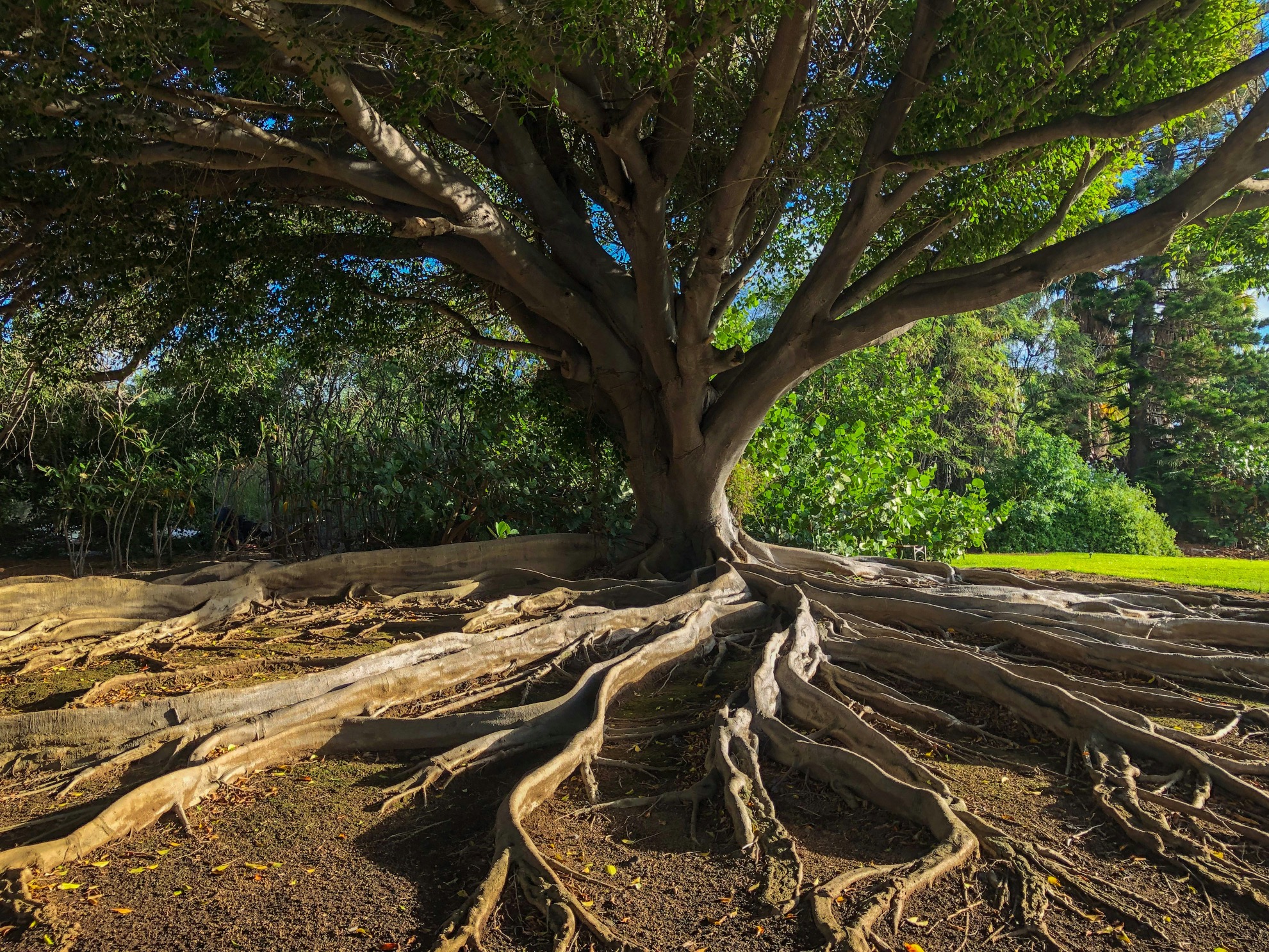
Most people think of tree roots as going straight down, mirroring the shape of the canopy above ground. In reality, the vast majority of a tree’s root system is relatively shallow and spreads outward far beyond the drip line. The critical root zone of a mature tree often extends one to two times the diameter of the canopy, and sometimes more. A tree with a 30-foot canopy spread may have roots extending 30 to 60 feet from the trunk in every direction, most of them in the top 18 to 24 inches of soil where oxygen and moisture are most available.
That means a trench route that looks like it’s comfortably clear of a tree on a site plan can still run directly through the most active part of that tree’s root system. And cutting through active roots during trenching doesn’t just create an obstacle. It can stress or kill a tree that’s been on that property for decades.
What Roots Are Actually Doing Underground
Understanding why root damage matters helps explain why this deserves more thought than it usually gets on a typical water line project.
Tree roots serve two main functions: anchoring the tree and absorbing water and nutrients. The large structural roots close to the trunk handle the anchoring. The smaller feeder roots, which spread wide and stay shallow, handle the absorption. It’s the feeder roots that are most vulnerable to trenching damage and most critical to the tree’s ongoing health.
When feeder roots get cut during trenching, the tree loses part of its ability to take up water and nutrients. A mature, healthy tree can often tolerate losing some percentage of its root system without obvious immediate effects. But the stress shows up over time, sometimes in the season following the damage, sometimes over several years, as the tree becomes more vulnerable to disease, drought stress, and structural failure.
The trees most at risk from trenching damage are mature trees that are already under any kind of stress, trees in compacted soil where root systems are already limited, and trees where multiple roots are cut during the same project. A single small root cut during a carefully executed trench is a very different situation from a machine trench that runs through a high-density root zone and severs dozens of roots at once.
The Critical Root Zone: What It Is and Why It Matters
The critical root zone is the area around a tree where root damage is most likely to affect the tree’s long-term health and structural stability. It’s typically calculated as a circle with a radius of roughly one foot per inch of trunk diameter, measured at chest height.
A tree with a 12-inch trunk diameter has a critical root zone with roughly a 12-foot radius from the trunk. A tree with a 24-inch trunk diameter has a 24-foot radius. These aren’t hard lines where damage inside is catastrophic and damage outside is irrelevant, but they’re a useful framework for understanding how far out the most important root structures extend.
When a trench route passes through the critical root zone of a mature tree, that’s worth a real conversation about routing alternatives before any digging starts. The goal isn’t to avoid all contact with any root ever. It’s to understand where the highest-value roots are and make deliberate decisions about when it’s worth rerouting versus when cutting a root or two at the edge of the zone is an acceptable tradeoff.
Insider Tip from Jeremy: “Before we start any trench job that’s going near established trees, I walk the route and look at the tree. Trunk diameter, canopy spread, visible surface roots, all of it tells you something about what you’re going to find underground. A big old cottonwood along a creek bank is a completely different situation than a young cedar that was planted ten years ago. You treat them differently.”
Routing Options When Trees Are In the Way
When a planned trench route runs through or near established trees, there are several ways to approach it, and the right answer depends on the specific situation: how many trees are involved, how mature they are, how critical the routing is, and what the alternatives look like.
Route around the critical root zone entirely. This is the cleanest solution when the geometry allows it. Adding distance to the trench run costs money, but it eliminates the root damage question entirely. On projects where the tree is particularly valuable, old, or in a location where losing it would be a real problem, this is usually the right call even if it adds meaningful cost to the project.
Bore under rather than trench through. Directional boring allows a line to be installed underground without an open trench, which dramatically reduces root disturbance compared to machine trenching. The boring head passes through the soil horizontally without cutting and removing it the way a trencher does. For situations where the trench route genuinely needs to pass under a significant tree and rerouting isn’t practical, boring is often the best tool for the job. It costs more than open trenching but it protects root systems that would otherwise be heavily impacted.
Hand dig through the root zone. In situations where the trench needs to pass near but not directly through the densest part of the root zone, hand digging through the sensitive area allows roots to be exposed and preserved or carefully cut at specific points rather than indiscriminately severed by a machine. This is slower and more labor-intensive than machine trenching, but it gives you real control over what gets cut and what doesn’t.
Make clean cuts on unavoidable root intersections. When a root does need to be cut, how it gets cut matters. A clean cut with a sharp blade heals better than a root that gets torn or crushed by a trencher chain. If a trench is going to cross roots, making clean cuts at the crossing points and minimizing the disturbed zone around each cut reduces the stress on the tree compared to a machine pass that tears through the root zone indiscriminately.
What Machine Trenching Does to Roots
It’s worth being specific about what happens when a standard trencher runs through a root zone, because the mechanics of it explain why the damage can be more extensive than it looks from the surface.
A trencher chain cuts through soil by essentially chewing through it, pulling material up and out of the trench. When it hits a root, it doesn’t make a clean cut. It tears, shreds, and often pulls the root along for several inches before severing it. The actual damage zone around a trencher pass is significantly wider than the trench itself, because roots near the trench get disturbed, displaced, and stressed even if they aren’t directly in the cut.
On top of that, the spoil pile from a machine trench gets deposited alongside the trench, and then backfilled after the pipe is laid. All of that soil disturbance, compaction from equipment passing over the root zone, and disruption to the soil structure around the roots adds to the overall stress load on the tree beyond just the roots that were directly cut.
This is why two trench routes that look similar on paper can have very different outcomes for the trees involved, depending on whether the route passes through the outer edge of the root zone or directly through the heart of it.
Did You Know: Root damage from trenching doesn’t always show up immediately. A tree that looks fine the summer after a trenching project may show significant stress the following year or the year after that, especially if the season following the damage includes drought conditions that push the tree’s reduced root system to its limits. By the time the tree looks visibly distressed, the damage was done a year or two earlier.
When You Don’t Have a Choice But to Go Through
Sometimes the site geometry genuinely doesn’t allow for a clean route around the trees. The water source is on one side, the destination is on the other, and the trees are in between with no practical way around them. In those situations, the goal shifts from avoiding root impact to minimizing it as much as possible.
A few principles that apply when routing through a root zone is unavoidable:
Choose the path that minimizes time in the critical zone. If the trench has to cross through the root area, crossing it at roughly a right angle is better than running parallel to the tree for any significant distance. A perpendicular crossing cuts fewer roots than a route that travels alongside the tree through its root zone.
Stay as far from the trunk as the routing allows. Root density and root size both increase as you get closer to the trunk. Even a few additional feet of separation from the trunk can meaningfully reduce the number and size of roots encountered.
Avoid compacting the soil in the root zone with heavy equipment beyond what’s necessary. Equipment passes over the root zone compact the soil, reduce oxygen availability to roots, and add stress beyond the direct root cutting. Keeping equipment movement in the root zone to what’s strictly required for the job reduces the cumulative impact.
Consider boring for the section closest to the trunk. Even on a project that’s being machine trenched everywhere else, switching to boring for the section that passes closest to a significant tree is sometimes the right call. It adds cost to that section of the project but protects the part of the root system where damage matters most.
Insider Tip from Jeremy: “The conversation I always want to have before a job like this is: which trees on this property matter most to you? Because that changes how we approach the routing. If there’s a 60-year-old oak that’s been on this farm since your grandfather planted it, we’re going to treat that differently than the volunteer trees along the fence line. Knowing that upfront saves everyone from making the wrong call mid-project.”
After the Trench: What Helps Trees Recover
If a trench project does involve cutting roots in or near the critical root zone, there are a few things that support tree recovery and reduce the likelihood of long-term damage:
- Water the affected trees during dry periods in the season or two following the project. Trees with reduced root systems are more vulnerable to drought stress, and supplemental watering during dry stretches helps them maintain function while the root system recovers.
- Avoid additional stressors in the root zone in the period following the project. No additional construction, soil compaction, or chemical applications near affected trees while they’re recovering.
- Make clean cuts on any roots that were torn rather than cut cleanly during the project. If the trench exposed torn root ends, trimming them cleanly with a sharp tool before backfilling gives the tree a better starting point for healing.
- Backfill with the original soil rather than fill material wherever possible. Roots reestablishing after damage do better in familiar soil than in imported fill with different structure and chemistry.
How This Applies on Farm and Rural Properties Specifically
On working farms and rural properties, the tree and water line question comes up in a few specific contexts that are worth addressing directly.
Shelterbelts and windbreaks are some of the most common obstacles on Midwest farm water line projects. A shelterbelt planted along a property line or field edge often sits directly in the most logical route for a water line running from a well or main supply to a distant pasture. These tree rows typically include a mix of species and ages, and the root systems of the larger, more established trees extend well into the surrounding field. Routing under or around a shelterbelt requires real planning, and boring is often the most practical solution for the section that passes through.
Riparian trees along creeks and draws present a different set of considerations. Trees growing along a waterway often have extensive, deep root systems tied to the water table, and they’re frequently protected by regulations that limit what can be done in or near the riparian zone. Any water line project that involves crossing or running near a creek with established tree cover is worth discussing with someone who understands both the technical routing options and the regulatory context.
Mature yard and farmstead trees are the ones where the relationship between the tree and the people on the property tends to matter most. A cottonwood that’s provided shade to a farmstead for 50 years is worth routing around even if it adds cost and distance to the project. Getting the routing right on a tree like that is a decision you only get one chance to make.
The Value of Planning the Route Before You Dig
Everything in this article comes back to one practical point: the time to think through tree and root conflicts on a water line project is before the equipment shows up, not after the first pass of the trencher has already gone through a root zone that could have been avoided with a slightly different route.
Walking the proposed trench route on foot, identifying every tree within a reasonable distance of the line, and making deliberate decisions about routing before digging starts is the single most effective thing you can do to avoid tree damage on a water line project. It costs nothing except a little time, and it gives you the information you need to make good decisions about where to trench, where to bore, and where to reroute.
A contractor who walks the route with you before quoting the job and asks about the trees along the way is thinking about the right things. One who shows up with a machine and starts digging without that conversation is not.
At Bear Creek Trenching & Welding, we’ve run water lines across farms and rural properties across the region, and we know how to work through the routing decisions that come up when trees are in the picture. If you’ve got a water line project where trees are part of the equation, give us a call at (402) 513-7275 or reach out through our website. We’ll walk the route with you and figure out the right approach before anything hits the ground.