

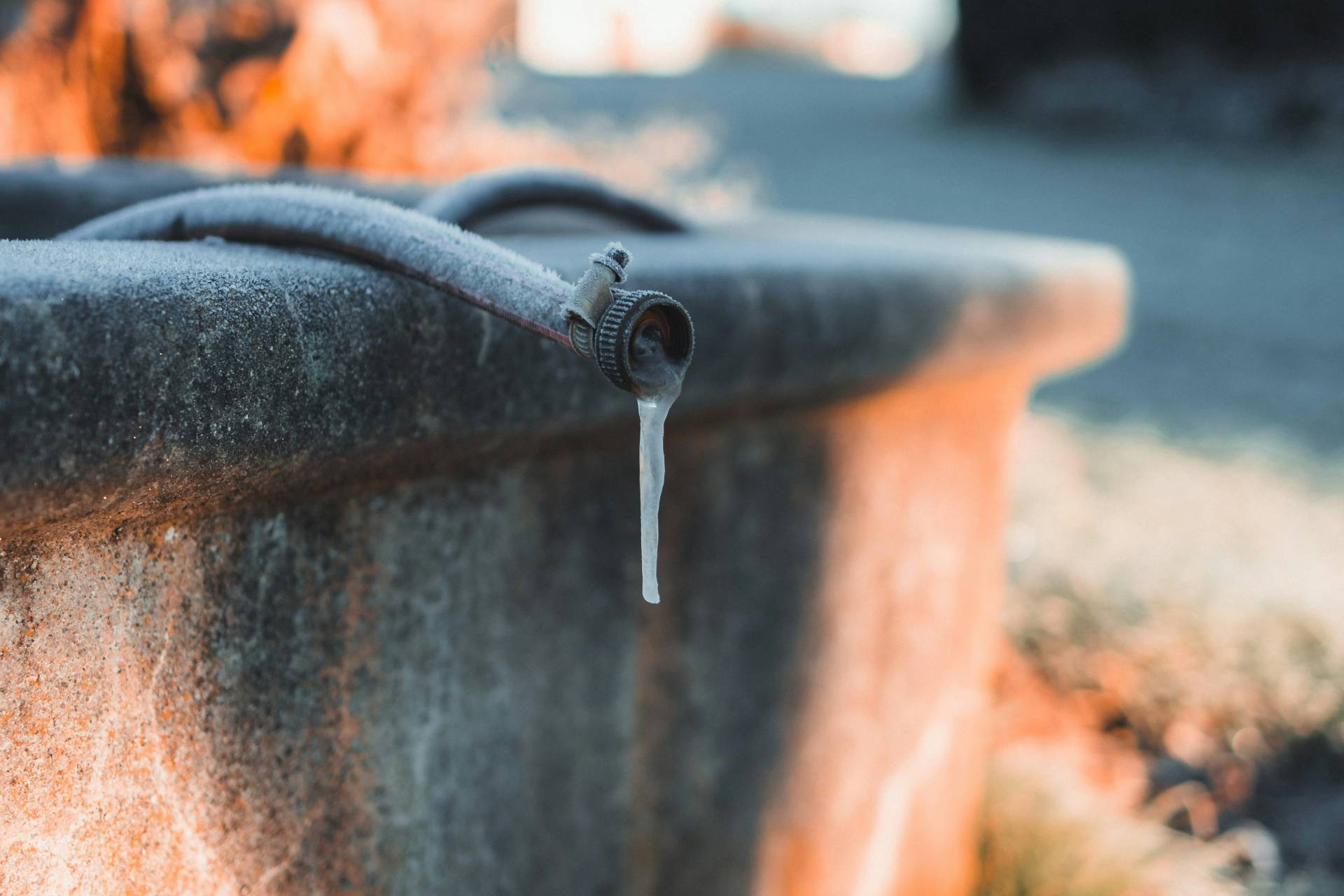
I hear this one every January: “I’ve got a heater in there. Why is it still frozen solid?”
It’s a fair question, and it’s more common than people think. Somebody drops a floating heater in the tank back in October, feels good about it, and then a cold snap hits in January and they’re standing out there with a hammer wondering what they paid for.
A heater isn’t a guarantee. It’s one part of a system, and if the rest of that system has a weak point, the heater can’t save you. Let’s go through why this happens, and what actually stops a tank from freezing instead of just fighting it.
Why a Heater Alone Doesn’t Cut It
A tank heater is designed to keep water from freezing, not to fix problems with the tank, the power supply, or the setup around it. It’s fighting a constant, uphill battle against heat loss, and it only works as well as everything around it lets it.
If any one part of that chain fails, the heater doesn’t matter. That’s the piece most people miss.
The Real Reasons Tanks Freeze Even With a Heater
The Heater Burns Out and Nobody Notices
This is the most common one I run into. A heater dies quietly, sometimes weeks before anyone checks it, and the first sign anybody gets is a solid sheet of ice on the coldest morning of the year.
The Heater Is Undersized for the Tank
Bigger tanks, especially ones exposed to wind, need more heating capacity than a lot of folks assume. A heater that worked fine in a smaller or more sheltered tank can get overwhelmed in a bigger one, especially during a hard, sustained cold stretch.
Power Gets Interrupted
Storms knock out power. Breakers trip. Extension cords running out to a pasture tank get chewed, kinked, or just fail from being outside all winter. Any gap in power is a gap in protection, and it doesn’t take long for a tank to freeze once the heat stops.
Wind Strips Heat Away Faster Than the Heater Can Replace It
An exposed tank in open wind loses heat a lot faster than a sheltered one. A heater that’s rated for calm conditions can get outpaced fast when the wind’s cutting across an open pasture.
The Design Itself Is the Problem
Here’s the piece that doesn’t get talked about enough: a heated tank still has standing water sitting in it around the clock. The heater’s whole job is to keep that standing water from freezing, forever, all winter long, without a single break. That’s a lot to ask of one component. If your stock tank has been freezing every winter for years no matter what you try, this is usually why. It’s not the heater’s fault. It’s the design fighting a battle it was never going to win permanently.
Insider Tip from Jeremy: If you’re on your third heater in five years, that’s not bad luck. That’s a sign the system itself needs a second look, not another heater.
What Actually Prevents Freezing, Not Just Slows It Down
The systems that genuinely stop freezing don’t rely on fighting the cold with heat. They remove standing water from the equation entirely.
That’s the whole idea behind a Drinking Post. There’s no tank sitting full of water waiting to freeze. The animal triggers a small amount of water into a bowl, drinks, and when it walks away, that water drains completely below the frost line. No standing water means nothing left to freeze, no heater to burn out, and no power to lose in a storm. If you’ve never seen how one of these actually works, we broke it down in an earlier post.
Insider Tip from Jeremy: I tell people this a lot: you can’t out-heat a design flaw forever. Eventually the weather wins. Removing the standing water removes the problem instead of just managing it.
Did You Know?
Watering facilities that meet USDA conservation standards for livestock water systems are built around minimizing exposure and standing water risk, not just adding heat. The NRCS Watering Facility Conservation Practice Standard lays out the design considerations that go into a facility built to actually perform reliably through winter, not just survive a mild one.
What This Looks Like in Real Conditions
I’ve had more than one producer tell me the same story: new heater every year or two, electric bill climbing every winter, still busting ice some mornings anyway. Every time, once we look at the actual setup, it comes back to one of the issues above, usually more than one at once.
The fix isn’t always a full system replacement. Sometimes it’s better wind protection, a properly sized heater, or a backup power plan. But for a lot of producers, especially ones tired of babysitting a heater every single winter, switching to a system that doesn’t rely on heat at all ends the problem for good.
A Few Questions I Always Get
Is my heater just bad, or is it something else?
Test it in the fall, not in January. If it’s working fine on a mild day but still freezing during a hard cold snap, the issue usually isn’t the heater itself, it’s everything around it.
Can I just get a bigger heater?
Sometimes. But a bigger heater means a bigger electric bill and still leaves you exposed to power outages and equipment failure. It’s a patch, not a fix.
Does a Drinking Post work in Nebraska winters?
Yes. That’s exactly the kind of cold it’s built for. No standing water means nothing sitting there to freeze, no matter how long the cold snap runs.
What if I’ve already got a heated tank I don’t want to replace yet?
That’s fine. We can look at your specific setup, check for the issues above, and help you get more reliable performance out of what you’ve already got until you’re ready for something different.
Final Thought: Stop Fighting the Cold and Start Removing the Problem
A heater is a tool, not a solution. If you’re still fighting frozen water every winter despite doing everything right on the heater side, the problem usually isn’t the heater. It’s what it’s being asked to fight against.
Call us at (402) 513-7275 or email info@bearcreekfarmsne.com if you’re tired of babysitting tank heaters every winter and want to talk through what actually stops the freezing for good.
Let’s get you out of the ice-busting business.