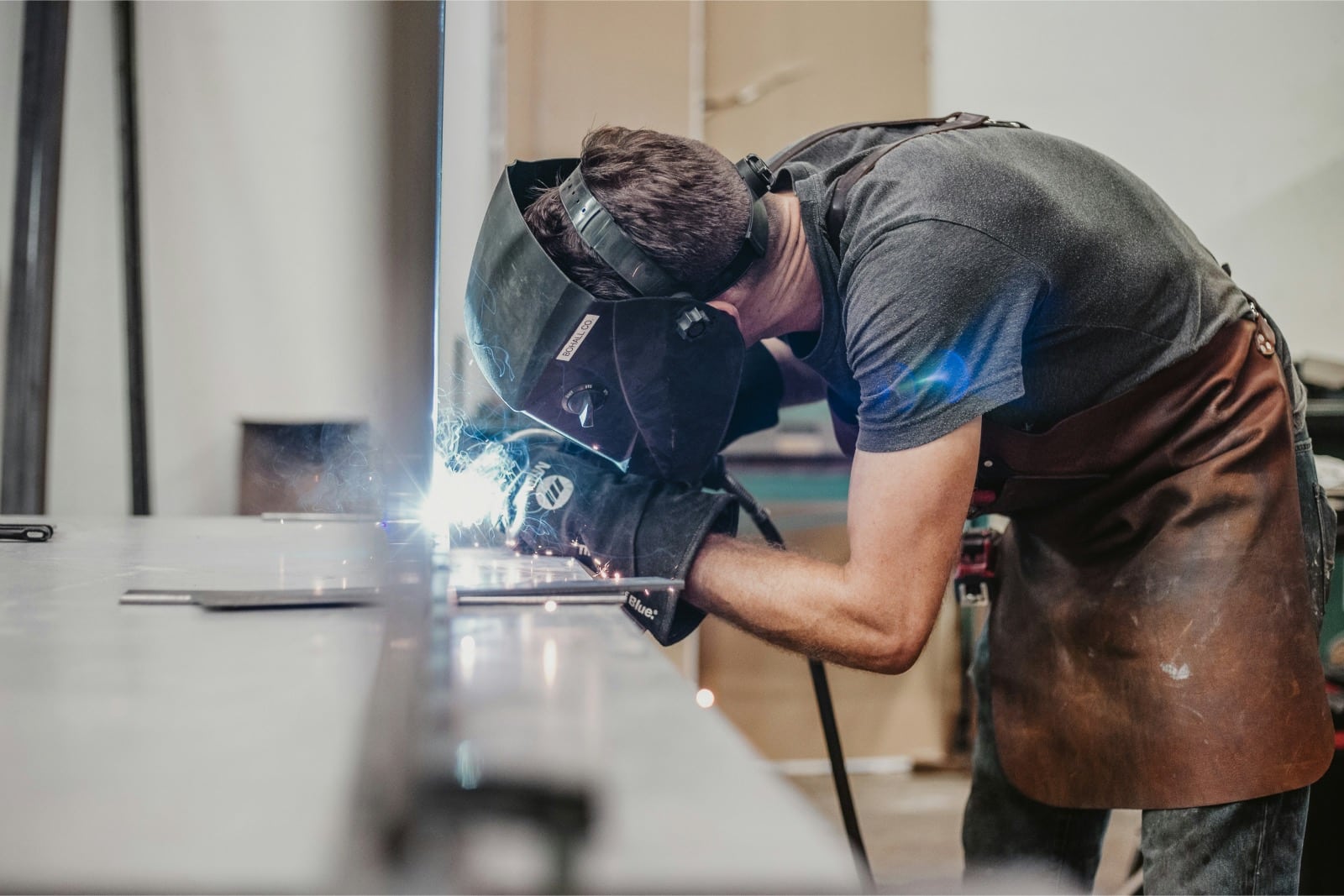
Shop class was a great start. You learned how to strike an arc, keep your hands steady, maybe built a toolbox or a tack rack. But welding on a working farm? That’s a whole different animal.
I’ve welded gates, feedlot fence, panels, tractor attachments, water line brackets, and even a chute once that somehow still worked after a bull ran through it. What I’ve learned is simple: pretty welds don’t always mean strong welds, and good intentions don’t matter when livestock hit it full force.
So if you’re welding on the farm, in the shop, or out in the field with a generator running and a storm rolling in, these are the best practices that will save your welds, your steel, and your sanity.
Farm Welding Isn’t the Same as Fabrication
The biggest mistake I see from people new to ag welding is treating it like fabrication or fab shop work. Farm welding doesn’t sit indoors on a workbench. It lives outside, under cattle pressure, in mud, rain, ice, heat, and with equipment knocking into it when you’re trying to beat the storm.
Here’s what makes farm welding different:
- Livestock push, rub, and crash into it daily
- Heavy equipment bounces against it when loading bales or backing trailers
- Weather beats the welds up every single season
- No second chances — if it breaks, it breaks under pressure
So if you’re still stacking beads like you’re in high school shop class, it might look good — until your gate sags or your feed trough folds after one bad bump.
Welding Prep That Makes or Breaks the Job
Before you ever strike an arc, your setup will determine 90% of whether the weld holds or fails.
1. Clean Steel or Don’t Bother
Rust, paint, mud, or manure? Weld right through it and you’ll get porosity, lack of fusion, or undercut.
I keep a flap disc on a grinder and clean the area to bare metal every single time. It only takes a minute, and it’ll save you hours later.
2. Fit Matters More Than Heat
If your fit-up is sloppy, your weld will be too.
- Use a square
- Clamp where needed
- Bevel your pipe ends if you’re doing fence or corner braces
- Don’t rely on weld to “fill in” gaps
If the steel doesn’t line up before you weld it, it won’t stay lined up after cattle test it.
3. Don’t Just Tack and Pray
I’ve done enough mobile repairs on panels held together by one sad tack weld. Tack it like it’s going to hold weight before you commit — then weld it full, slow, and smart.
Tools That Work (And Tools That Lie)
There are a million ways to get a weld down. Here’s what actually works out here where the gravel is soft, the wind blows hard, and the power line’s 400 feet from the post.
MIG vs Stick
- MIG is great in the shop — quick, clean, efficient.
- But in the field? Stick welding is king. It powers off generators, cuts through scale better, and is more forgiving in rough conditions.
Generator Welders
If you’re not welding where there’s a power source, invest in a solid generator welder. I run a Miller Bobcat. Reliable, easy to maintain, and starts up even when it’s -10 and the ground’s frozen solid.
Rods That Actually Hold
For pipe fence and gates?
- 7018 rod all day. Strong, ductile, impact-resistant.
- For rusty stuff or fast dirty work, 6011 will burn in almost anything, but it’s not as clean.
- If it’s vertical or overhead, practice with 6010/7018 combo runs.
PPE That Doesn’t Suck
Welding in a barn in August? You need gear that doesn’t roast you.
- Leather sleeves
- Clear safety glasses under your helmet
- Auto-darkening hoods are worth every penny
Common Mistakes That Always Fail
You don’t have to be a pro to weld. But you do need to avoid the classic screw-ups that show up again and again on ranches:
- Welding cold — If your rod sticks every strike, it’s too cold or dirty
- Poor penetration — A bead on top is not the same as fusion
- Thin patchwork — Throwing scrap over a hole doesn’t fix it
- Wrong angle — Flat welds on vertical braces = weak structure
- Over-welding — Too much bead builds stress. You’re not gluing it — you’re bonding it.
Insider Tip from Jeremy:
A good weld looks simple. If you’re running multiple passes and still seeing cracks, it’s not the rod — it’s your setup. Line it up right, clean it down, and take your time. I’d rather have one clean pass than three sloppy ones.
What I Learned the Hard Way
There was a time I welded all my gates with short tacks and whatever rod I had left in the box. They held… until one winter, a group of calves piled up at the corner and popped a hinge like it was hot glue.
Since then, I:
- Bevel pipe connections
- Use real hinges with back-welded supports
- Paint everything the same week I finish it
- And assume every gate is going to get kicked, rubbed, and leaned on 10x a day
If I wouldn’t hang off it myself, I don’t trust it for a bull.
Welding for Ranch Life: Not Just Pretty Beads
I’m not trying to win awards here. I’m trying to build things that last.
That means:
- Welds that can take hoof pressure, rubbing, winter shifts
- Knowing what steel will bend, crack, or stress
- Using pipe with actual wall thickness — skip the paper-thin stuff
- Fixing before it fails, not after
- Spraying paint to seal welds and fight rust
- Building to last 5 years, not 5 months
Insider Tip from Jeremy:
I always use primer before paint. It takes 10 minutes and adds years to the life of a weld. Rust doesn’t care how good the bead looks — it’ll eat right through it.
Weld Once, Not Twice
Look, I’ve chased broken welds across more pipe fence and gates than I’d like to admit. It’s not about being perfect — it’s about being prepared and practical.
Use the right tools. Take the extra minute to clean your metal. And for the love of the livestock, stop relying on tacks and good intentions to hold a gate that gets slammed five times a day.
If your welding setup looks like shop class, expect shop-class-level results. If you’re building something that’s going to take real abuse, weld like it.
Need It Done Right?
Whether you’re building new gates, patching fence, or welding up a chute, we can help. Bear Creek Farms does welds that aren’t just pretty — they hold up when it counts.
📞 Call (402) 513‑7275
📧 Email info@bearcreekfarmsne.com
Let’s weld it once — and weld it for real.